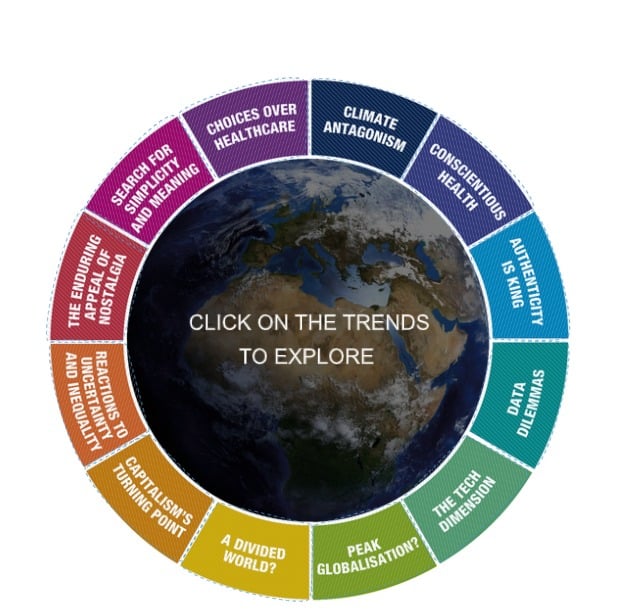
Life Is Changing Fast- The Big Forces Driving Life In The Years Ahead
Top 10 Climate And Sustainability Trends That Will Be A Hot Topic In 2026/27.The issues of sustainability and climate are moving from the margins of public debate to the forefront of business strategy, economic planning as well as everyday decision-making. This science was evident for decades, but the translation of that knowledge into investment, policy, and behavior changes is taking place at a rate and scale that seemed ambitious even some years ago. There is a lot of debate, disagreement within certain quarters and not nearly fast enough for the majority of experts. But the direction of travel is shifting in ways that are increasingly challenging to overlook. Here are ten global eco-friendly and sustainability trends that are making headlines in 2026/27.
1. It is the Energy Transition Accelerates Beyond ExpectationsRenewable energy investment continues surpass even optimistic projections. Wind and solar capacity increases surpass records every year, costs have slowed to levels that make renewable power the most economical option in the majority of markets that do not have subsidies, and investments in grid infrastructure and storage is ramping up to keep pace with. The transition to renewable energy is not without complications. The fossil fuel dependence remains involved in a variety of economies, and the speed of change is different across regions. However, the logic of economics behind green energy has become incredibly strong that the pace is mostly self-sustaining in the market that drive the transition.
2. Carbon Markets Mature And Face Greater ScrutinyThe carbon markets for voluntary participation have gone through a turbulent year, with high-profile probes revealing that the majority of carbon credits traded have delivered less benefit to climate that they claimed. This has led to a push for higher standards as well as greater transparency and more rigorous verification. Carbon markets that are compliant with regulatory frameworks are increasing in both size and coverage, and the pressure on voluntary markets to show genuine addition and durability is altering the definition of what a credible carbon offset like. The underlying concept remains important and the standards necessary to ensure that the market is credible are increasing.
3. Climate Adaptation Receives Long-Overdue InvestmentFor a long time, climate policy was primarily focused on the mitigation of climate change, by reducing emissions and helping in order to prevent future warming. The reality that substantial warming is already being absorbed has brought adaptation, building resilience to the impacts that are now not a choice, on the agenda. In addition, heat-resilient urban design, drought-resistant agriculture as well as early warning systems to deal with extreme weather events are all getting investments at a rate which reflects a better assessment of what the next years will bring. The concept of adaptation is no longer seen as abandoning mitigation but rather as a necessary alternative to mitigation.
4. Corporate Sustainability Reporting Becomes MandatoryThe period of voluntary self-reported, and mostly unsubstantiated corporate sustainability promises is drawing to an end in a number of regions. Mandatory disclosure requirements on sustainability for emissions, climate risk exposure, and the impact of supply chains, are now being introduced across a variety of major economies. These are forcing companies to move away from the aspirational net-zero commitments to documented, auditable strategies with clearly defined interim targets. This is becoming a challenge for many companies, but the move to standardised, comparable sustainability data is widely considered a necessary step towards holding companies accountable for their commitments to climate change accountable.
5. The Food System Comes Under Greater Pressure to ChangeLand use and agriculture are responsible for a significant share of greenhouse gas emissions globally, and the food system that includes the production, processing, packaging, and waste, has an environmental footprint that is becoming increasingly difficult to ignore. The way consumers consume food is changing slowly in the direction of plant-based alternatives becoming increasingly popular and food waste reduction growing in popularity both at household and commercial levels. In addition, pressure from policymakers on the emission of agricultural gases along with deforestation related to food production, and the utilization of land for carbon sequestration is building in ways that will reshape the way in which food is produced as well as the method of production.
6. Biodiversity Loss Gains Traction Alongside ClimateIn the last decade, biodiversity loss been ignored in the context from climate change public and policy discussions despite being an equally serious planetary crisis. That is changing. The international frameworks that govern corporate reports, obligations and the growing use of scientific communications about the relationships between ecosystem collapse and human well-being are increasing the public awareness of biodiversity substantially. The concept of nature-positive businesses with a focus on ways to restore rather than degrade natural systems, is progressing from niche-based commitment to a new standard in the same way net zero did several years ago.
7. Green Hydrogen Moves From Promise to PilotGreen hydrogen, which is produced by using renewable energy to split water, has been cited as a critical solution for reducing carbon emissions in sectors where direct electrification isn't possible, like shipping, heavy industry, and long-haul aviation. The issue has always been cost and the size. As 2026/27 approaches, a greater many large-scale hydrogen production projects moving from feasibility studies to production. Costs are decreasing due to the advancement of electrolyser technology, and governments are bolstering the industry with serious investments. If green hydrogen is able to scale fast enough to meet expectations placed on it remains an unanswered concern, but advancements are speeding up.
8. Climate Litigation Its Use Expands to ensure accountabilityLegal enforcement has emerged as one of the more potent mechanisms to hold corporations and governments to their commitments to climate change. Legal cases brought by citizens cities, as well as environmental groups have resulted in landmark decisions in many countries, and courts are increasingly willing to find that large emitters and the governments they serve have legal obligations related to protecting the climate. The number of climate-related cases has risen significantly over the past five years and has continued to increase. In the case of government boards he has a good point and corporate ministers, the risk to their legal rights of insufficient climate action has become a material concern rather than a hypothetical one.
9. It is the Circular Economy Moves Into The MainstreamThe model of linearity that includes take as, make and dispose continues to be under intense pressure from regulations, consumer expectations and the economic benefits for keeping materials in production for longer. Extended producer responsibility legislation is growing, requiring manufacturers to be accountable for the environmental impacts that come with their products. Repair recycling, reuse and resale marketplaces are growing across various categories including clothing, electronics, and furniture. And major businesses have been investing heavily in the design of the supply chain and products around circularity instead of viewing circularity as a matter of secondary importance. "Circular Economy" has no longer been a nebulous idea but is a growing element of how sustainable business is defined.
10. Climate Anxiety Influences Public Attitudes and BehaviourThe psychological ramifications of the climate crisis is drawing a lot of attention. Climate anxiety, a persistent fear of the environment's decline, is particularly frequent among younger people who have been raised with the crisis as a central aspect of their lives. This is shaping consumer behaviour regarding career options, health habits, and political engagement in way that is becoming apparent in a larger scale. The ways in which societies help people navigating climate anxiety while channelling it into productive actions rather than apathy or despair is proving to be the real issue facing public health, education, and political leadership in general.
The challenge to be faced by climate change, as well as ecological breakdown is enormous, and there is an abundance of reasons for doubt whether our efforts are sufficient. What these trends show, however, is an increasingly global society that is dealing on the crisis with greater vigor, more practically, and far more quickly than at any previous time. The gap between what is happening and what's necessary is still quite large, yet it is increasing in number of fields, beginning to be closing. For further info, visit the leading asiavoicesg.com/ to find out more.
 Top 10 Health And Fitness Shifts Taking Over In 2026/27
The way people view sport exercises, physical performance is changing more rapidly than at almost any previous moment. Technology is transforming the way the elite athletes train, compete, as well as how ordinary people understand and manage their own fitness. Cultures' attitudes toward physical exercise have changed with a focus on broadening participation, breaking down traditional barriers, and producing new kinds of sports and activities that weren't even in existence until a decade ago. Be it a serious player, an occasional gym goer or someone just beginning to think about your physical health the landscape will be significantly new in 2026/27. Here are ten sports and fitness trends that are dominating.
1. Wearable Technology Delivers Increasingly Sophisticated InsightThe new generation of wearable fitness technology that will be available in 2026/27 reaches far beyond counting steps and assessing heart rate. Continuous glucose monitoring blood oxygen saturation heart rate fluctuation, skin temperature sleeping status and hydration structures are being tracked through consumer devices at the same level of precision that was previously only available in clinical or elite performance settings. The burden has been shifted from the collection of data to its interpretation accurately, and the systems built around wearables invest heavily in AI-driven analyses that convert raw physiological data into actionable instructions for users of all ages instead of just numbers that require specialists to interpret.
2. Recovery is as important as TrainingThe realization that the process of adaptation for training happens during recovery instead of during training itself has elevated recovery from being an afterthought to becoming an integral component of fitness culture. Recovery-focused sleep, active protocols, cold water therapy, heat exposure through saunas with compression technology, massage guns, and nutritional strategies for recovery are all popular concerns rather than specialized pursuits. Elite sport has always understood this, however the tools know-how, the information, and the cultural confidence to prioritize recovery has made it available to recreational athletes and general fitness enthusiasts. The shift reflects a broader change away from the more-is-more approach to training and towards better calibration of the tension and recovery.
3. Functional Fitness can displace pure aesthetic GoalsThe primary reason for training has traditionally been physical appearance, and building a body which looks certain. There is a significant shift going on towards functional fitness training that concentrates on what the body can accomplish rather than how it looks. For everyday living, strength, mobility of balance, cardiovascular fitness, and the ability to stay physically fit through old age are all increasing as primary motivations for fitness. This is indicative of a growing population that is now thinking more about longevity and longevity, as well as a larger perspective on what physical fitness is actually for. Training techniques that emphasize fitness quality, compound strength and metabolic conditioning are the primary clients.
4. Exercise and Mental Health are Being Increasingly ConnectedThe scientific evidence linking regular physical activity with improved mental health has gotten sufficiently solid that physical activity is currently being discussed in clinical contexts as a genuine therapeutic treatment for depression anxiety, and stress, rather that merely a simple lifestyle recommendation. This is impacting how fitness is advertised and also the way that people think about their own fitness habits. The concept of exercise as mental health maintenance as much that it is physical health maintenance is spreading to mainstream audiences and transforming how many people feel with exercise from an obligation related to appearance to a activity that contributes to overall wellbeing. The prescription for exercise by health professionals is becoming more widespread because of.
5. Combat Sports Reach New Mainstream AudiencesMixed martial arts, boxing with kickboxing and other newer styles such as bare-knuckle MMA have seen a significant increase in popularity caused by social media, streaming platforms and the development of events that cross over and bring big-name attention to fight sports. Beyond watching, combat sports participation is increasing significantly by boxing fitness Brazilian Jiu-Jitsu, Muay Thai, and MMA training attracting a large number of people who don't have competitive ambitions but find the blend of skill development in physical conditioning, psychological challenge compelling in ways conventional workouts do not. The culture and the community surrounding combat sports gyms has proven to be as a strong retention strategy in a fitness field that has a problem with dropout.
6. Personalised Nutrition & Supplementation Gets MainstreamThe application of personalised techniques for assessing nutrition in sports, that are adapted to the individual's physiology, the demands of training, recovery requirements and health objectives rather than standard population guidelines, is now transforming from elite sport into the mainstream fitness culture. Food-based recommendations based on DNA, gut microbiome analysis continuous glucose monitoring in order to understand individual metabolic responses to food, and AI-driven diet planning tools are all available to all fitness enthusiasts. The supplement market is changing as well, with more advanced and scientifically-based products replacing the more speculative side of the industry that was historically susceptible to exaggeration.
7. Outdoor And Adventure Fitness Experiences SurgeGym-based exercise faces growing competition from adventure and outdoor fitness experiences that offer physical challenge combined with environmental encounter, novelty, and relationships in ways indoor training struggles to replicate. Trail running, open-water pool, outdoors climbing, gravel cycling, and organised adventure races are increasing exponentially. The appeal isn't just limited to all the options. Research into the psychological and physiological benefits of exercise in natural environments is building convincing evidence that outdoor exercise has benefits for wellbeing that indoor counterparts don't completely compare to. Urban populations that have limited access to nature are driving the need to organize experiences that bring an outdoor challenge to those who can.
8. Esports And physical Gaming Transform Traditional BoundariesThe relationship between digital gaming and fitness training is far more complex than the sedentary stereotype suggests. Esports players train using well-designed physical conditioning programs to improve the reaction time, concentration and stress-management their challenges, and the physical conditioning required for top-level games is being considered increasingly seriously. At the same time, physically active games, mixed-reality fitness experiences, and gamified workout platforms are attracting people into activities that they have not previously played with traditional fitness. The lines between physical sports or mental exercise, as well online entertainment are becoming blurred in ways that are increasing the overall number of people participating in structured exercise and cognitive learning.
9. Women's Sport Continues To Gain Ground ProgressThe women's sport is experiencing a prolonged period of growth in attendance, broadcast audience, sponsorship, and popularity in the media, which indicates the real shift in structure instead of a sporadic spike. Cricket, football, rugby and basketball are all seeing women's sporting events get the kind of commercial funding and public attention that was previously concentrated almost entirely in men's sport. The number of girls competing in organized sport is more extensive than before in any of the developed markets, this has implications in the long run for the talent pool with regards to participation, participation, and their status as serious athletes. The trajectory is strongly positive even as huge gaps in funding, media coverage, and wages in comparison to comparable male competitions persist.
10. Longevity and Healthspan drive A New Fitness PhilosophyThe most significant change of the fitness culture in 2026/27 is a rethinking of fitness training to be based on lifespan and healthspan, as opposed to short-term performance or aesthetic goals. Research on the connection to specific training modalities, especially strength training and cardiovascular fitness, as well as long-term performance outcomes like metabolic health, cognitive function and bone density as well as mortality risk has influenced how people consider the things they train to train for. Zone 2 cardiovascular training, which improves aerobic fitness which is linked to metabolic health and longevity, as well as progressive resistance training to build your strength and muscle mass as you the process of aging are both drawing serious attention from those who are considering what they want their physical abilities to be when they reach the age of sixty seventy, seventy, or even more.
The 2026/27 years of fitness and sports are a reflection of a society that is working towards physical fitness in more advanced, more personalized and more holistic ways than in the past. The trends mentioned above have some commonality: a transition away from narrow superficial, short-term-focused thinking towards the broadest and most sustainable perception of what it takes to be physically fit. For individuals willing to engage in this transformation, the resources, information and support available to assist them have never been better. To find further information, head to some of these reliable pressgrid.nl/ for more insight.